
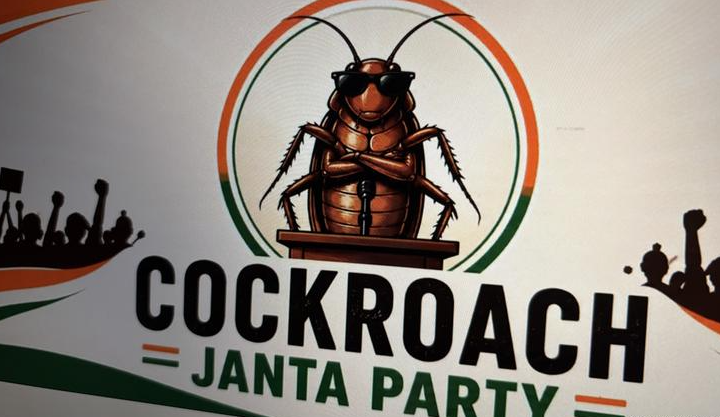
A satirical online movement known as the “Cockroach Janta Party” is rapidly gaining attention across India, drawing millions of young supporters and creating discomfort within the country’s political establishment.
The viral protest campaign began after reports emerged that Indian Chief Justice Surya Kant had referred to unemployed youth as “cockroaches” and “parasites” during a court hearing. The remarks triggered outrage online, especially among young Indians already frustrated over unemployment and political issues.
Although Justice Kant later clarified that his criticism was aimed only at people using fake degrees to secure jobs, the backlash had already exploded across social media.
On Thursday, the account of the “Cockroach Janta Party” — widely known as CJP — was blocked on X, further fueling debate around free speech and online dissent in India.
The satirical movement was launched just days earlier by Abhijeet Dipke, a public relations student at Boston University. Dipke said the campaign was designed to channel youth frustration into political accountability.
The movement quickly gained momentum online, with AI-generated images of a fictional “cockroach leader” flooding Indian social media platforms. The name “Cockroach Janta Party” is widely seen as a parody of India’s ruling Bharatiya Janata Party, commonly known as the BJP.
Within less than a week, the CJP’s Instagram account reportedly crossed 20 million followers — surpassing the online following of several major Indian political parties, including the Indian National Congress.
Despite its massive online popularity, Dipke said the movement has no plans to contest elections. Instead, he described it as an effort to reshape political discussion and push leaders to become more accountable to young citizens.
The group has also released a satirical five-point manifesto calling for political reforms, including restrictions on judges receiving post-retirement appointments, stronger protections for voting rights and independent media, greater representation for women in Parliament, and limits on politicians switching parties for personal gain.
“This is something unprecedented,” Dipke said, adding that the movement aims to challenge traditional politics through digital activism and humor.
The sudden rise of the CJP highlights growing frustration among India’s youth over unemployment, governance, and political transparency — while also showing how online satire is becoming an increasingly powerful form of protest.

