
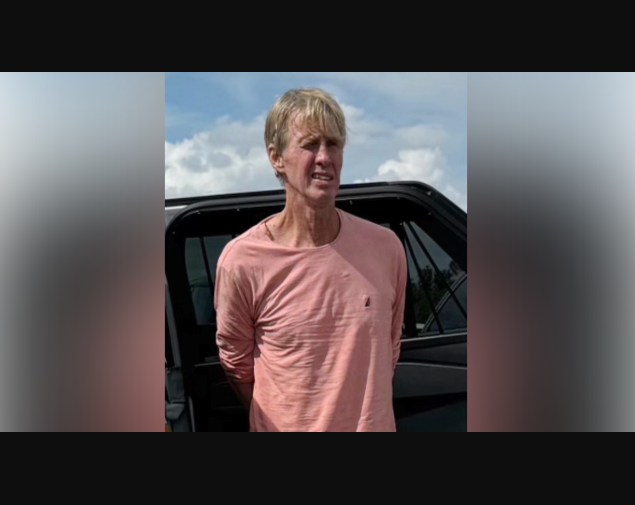
A federal court in Florida has sentenced Ryan Routh to life imprisonment for attempting to assassinate US President Donald Trump at a West Palm Beach golf course in September 2024. The case marked one of the most serious security incidents involving a presidential candidate in recent years.
Why This Matters
The ruling highlights the growing concerns over political violence in the United States and the challenges facing the Secret Service in protecting public figures. The incident underscored how easily campaign events and everyday movements can become targets, raising questions about security protocols ahead of future elections.
Background & Context
The attack unfolded at the Trump International Golf Club in West Palm Beach while Trump was campaigning for a return to the White House. According to testimony presented during the trial, a Secret Service agent conducting routine surveillance noticed the barrel of a rifle emerging from bushes near the course. The agent opened fire, prompting the suspect to flee before being apprehended a short distance away.
Federal investigators later recovered a semiautomatic rifle fitted with a scope and extended magazine from the location where Routh had been hiding. Prosecutors told the court that the weapon and the suspect’s preparations demonstrated a clear intent to kill.
Judge Aileen Cannon, delivering the sentence, wrote in a memorandum that the crimes “undeniably warrant a life sentence.” She noted that Routh had taken steps over several months to plan the attack and had shown “neither regret nor remorse.”
The case added to a tense political climate in 2024, a year already marked by heightened threats against elected officials. Earlier reports from security agencies warned of increasing online radicalization and lone-actor violence targeting candidates.
Key Facts of the Case
- Routh, 59, was convicted of attempting to assassinate Trump while he was still a presidential candidate.
- A Secret Service agent detected the rifle barrel and intervened before any shots were fired toward Trump.
- Investigators found a list of locations where Trump was expected to appear and a note describing the plan as “an assassination attempt.”
- The defendant represented himself at trial and pleaded not guilty.
- His legal team has announced plans to appeal the verdict.
Court Proceedings and Evidence
Routh, originally from North Carolina and most recently living in Hawaii, chose to act as his own attorney during the trial that began on 8 September 2024. Observers described his behavior in court as erratic. He made unrelated references to world leaders and historical figures, at times forcing the judge to pause proceedings and remove the jury.
Prosecutors presented what they called a “mountain of evidence,” including surveillance records, the recovered weapon, and written materials linking Routh to detailed planning. Lead prosecutor John Shipley told jurors that the evidence showed “how close he got to actually pulling this off.”
At one point after the guilty verdict was read, Routh attempted to injure himself with a pen before being restrained by US marshals, an episode that further highlighted concerns about his mental state.
Although authorities confirmed that Routh never had a direct line of sight to Trump, security officials testified that the distance between the hiding place and the golf course was close enough to pose a lethal threat.
Expert Outlook
Legal analysts say the life sentence reflects the judiciary’s determination to deter attacks on democratic institutions. Researchers who study political extremism note that such cases often involve long periods of fixation and online activity before violence occurs.
Security specialists have called for expanded protective perimeters around candidates and greater monitoring of threats flagged by the public. Agencies involved in earlier reports on election security have warned that lone-actor plots remain difficult to detect, especially when individuals act without clear organizational ties.
Defense attorney Martin Ross argued that procedural issues during the self-representation phase could form the basis of an appeal. However, most commentators believe overturning the conviction will be challenging given the physical evidence and witness testimony.
What Happens Next
Routh will begin serving his sentence in federal custody while the appeal process moves forward. The Secret Service and Department of Homeland Security are expected to review the incident as part of broader reforms to candidate protection.
The case is also likely to influence future legislation on threats against public officials, an issue already debated in Congress following related developments during the 2024 campaign season. Law-enforcement agencies have signaled that coordination between local police and federal protective units will be expanded.
The sentencing of Ryan Routh closes a dramatic chapter in a year marked by unprecedented threats to US political leaders. While the intervention of a Secret Service agent prevented tragedy, the episode serves as a stark reminder of the fragile line between heated political rhetoric and real-world violence. Authorities now face the continuing task of safeguarding democratic processes in an increasingly polarized environment.

