
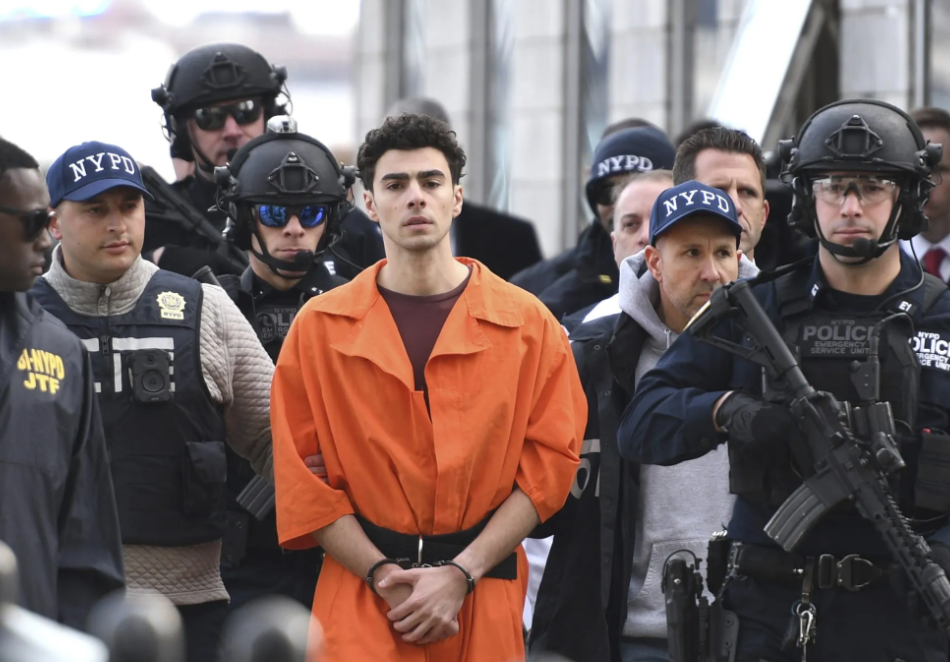
A federal judge in New York has removed the death penalty as a possible punishment in the case against Luigi Mangione, ruling that the charges do not meet the legal requirements for a capital case.
On Friday, U.S. District Judge Margaret Garnett dismissed the death-eligible counts from Mangione’s federal indictment. The decision clears the way for his federal trial to move forward later this year without the possibility of a death sentence.
In her ruling, Judge Garnett explained that while the alleged conduct is serious, federal law requires a narrow legal interpretation when determining whether a crime qualifies as a “crime of violence.” She concluded that stalking, as defined under federal law, does not automatically involve the use of physical force and therefore cannot serve as a basis for capital punishment.
The judge acknowledged that the allegations describe disturbing behavior but said Supreme Court precedent requires courts to assess the statute itself rather than the specific facts of the case. Under that framework, stalking alone does not meet the legal threshold needed to pursue the death penalty.
Mangione appeared in federal court shortly after the decision was issued, wearing jail clothing. Supporters who were present in the courthouse reacted positively when the ruling became known.
Defense attorneys had asked the court to remove the death penalty option, arguing that the charge of stalking does not qualify as a violent crime under federal law. They also claimed that the decision to seek capital punishment was procedurally flawed. Prosecutors said they were reviewing the ruling and have until February 27 to decide whether to appeal.
Mangione has pleaded not guilty to both state and federal charges related to the killing of UnitedHealthcare executive Brian Thompson in Manhattan in December 2024.
With the death penalty no longer in play, Judge Garnett scheduled jury selection for September 8, with opening statements set for October 13. A separate state case is also pending, and prosecutors are seeking to begin that trial earlier, though the federal court schedule remains unchanged for now.
The judge also ruled that evidence obtained from Mangione’s backpack at the time of his arrest in Altoona, Pennsylvania, can be used at trial. This includes a weapon and written materials that prosecutors say link him to the crime. The court found that the search met legal exceptions to warrant requirements and that the evidence would likely have been discovered regardless.
Defense attorneys had challenged the search as unlawful, but the judge rejected that argument, allowing the evidence to remain part of the prosecution’s case.

