
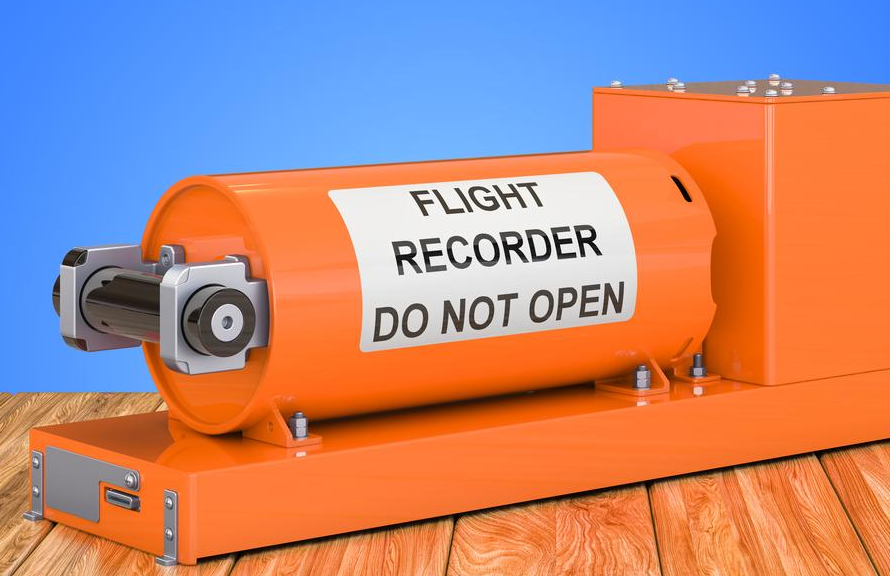
Whenever an aircraft accident occurs, one of the first priorities for investigators is to locate the black box. This small but highly durable device plays a crucial role in uncovering what caused a plane to crash and helps aviation experts prevent similar incidents in the future.
Despite its name, a black box is not black. It is painted bright orange so that it can be easily spotted among wreckage, even in difficult conditions such as oceans, forests, or fire-damaged areas. Every commercial aircraft is equipped with this essential safety device.
What Is a Black Box and What Does It Record
A black box is actually made up of two separate recorders. The first is the Cockpit Voice Recorder, commonly known as the CVR. This unit captures conversations between pilots, radio communications with air traffic control, warning alarms, and other sounds inside the cockpit. These audio recordings often provide critical clues about what was happening in the final moments before an accident.
The second component is the Flight Data Recorder, or FDR. This device logs technical information related to the aircraft’s operation. It records data such as altitude, speed, direction, engine performance, control settings, and many other flight parameters. Together, these two recorders allow investigators to reconstruct the sequence of events leading up to a crash.
Why the Black Box Survives Crashes
The black box is designed to withstand extreme conditions. It is built with heat-resistant materials and reinforced casing that can survive high-impact crashes, deep-sea pressure, and intense fires. This durability ensures that crucial data remains intact even after severe accidents.
Because of this strong construction, black boxes have helped investigators solve numerous aviation accidents around the world. The information recovered has led to improved safety rules, better aircraft design, and stricter aviation standards.
How the Black Box Helps Reveal the Cause of an Accident
After a crash, search teams focus on recovering the black box as quickly as possible. The device also contains a locator beacon that emits signals, making it easier to find underwater or in remote areas.
Once recovered, specialists analyze the recorded audio and flight data using advanced systems. The cockpit recordings reveal pilot actions and reactions, while the flight data shows how the aircraft was behaving mechanically. Together, this information helps determine whether the crash was caused by technical failure, weather conditions, human error, or a combination of factors.
This detailed analysis plays a vital role in improving flight safety worldwide and preventing similar accidents in the future.


